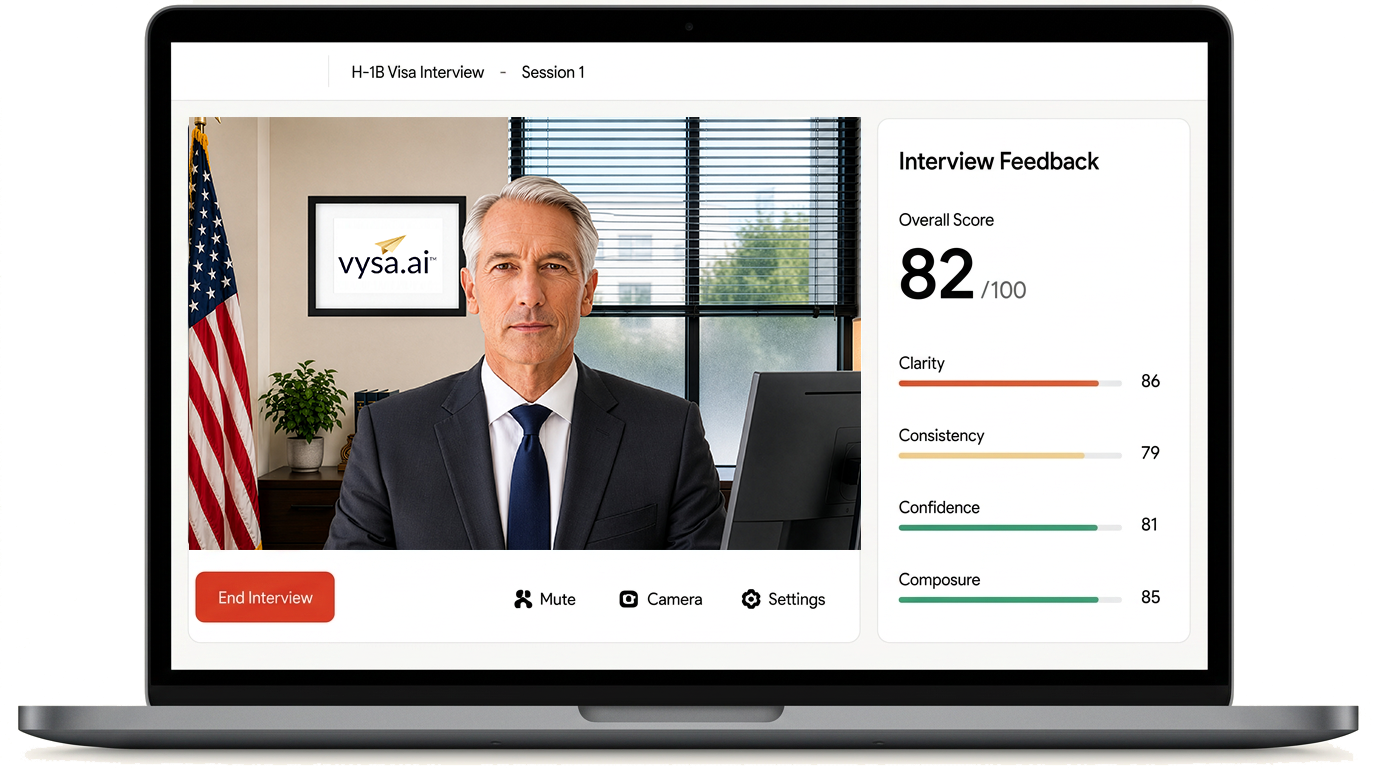




Reading tells you what may be asked. vysa.ai lets you experience the pace, pressure, and follow-up questions of a live immigration interview—and then review what happened.
Practice explaining your relationship to the principal visa holder, whether you are a spouse or child, and how your family structure fits the application.
Practice answering questions about what the principal visa holder does in the United States, what visa that person holds, where that person works or studies, and how long that person is expected to remain there.
Practice explaining whether you are traveling with the principal visa holder or joining later, why the timing makes sense, and what your family’s plan is after arrival.
Practice staying comfortable with the key facts behind your case so you can answer questions that match the documents you are carrying.
Practice giving short, clear answers under pressure instead of sounding vague, overexplaining, or getting lost in the moment.
Useful for spouses of H-1B, H-2, or H-3 visa holders preparing for an H-4 interview.
Useful for applicants who are not traveling with the principal visa holder and need to explain timing clearly.
Useful for families who want to prepare in a more organized and realistic way before the interview.
Useful for applicants with prior refusals, unusual timing, or concerns about answering clearly in a short interview.
Useful for professionals and family members helping someone prepare for an H-4 interview.
Common questions often focus on your relationship to the principal visa holder, what that person is doing in the United States, why you are traveling now, whether you are joining later, and what documents support the relationship.
Yes, that is common. You should usually be ready to explain the basic facts of the principal visa holder’s visa type, job, school, or purpose in the United States.
That is not unusual, but you should be ready to explain why you are traveling later and how the family timing fits together.
You should be familiar with the basic documents supporting the relationship and the principal visa holder’s status, even if the officer does not ask for many of them.
The strongest preparation usually includes practicing answers out loud, reviewing likely follow-up questions, and making sure your family story sounds clear, consistent, and natural under pressure.




vysa.ai is a realistic immigration interview simulator. Practice visa, green card, citizenship, and compliance interviews with an AI officer designed by experienced U.S. immigration lawyers and built around how real immigration interviews actually unfold.